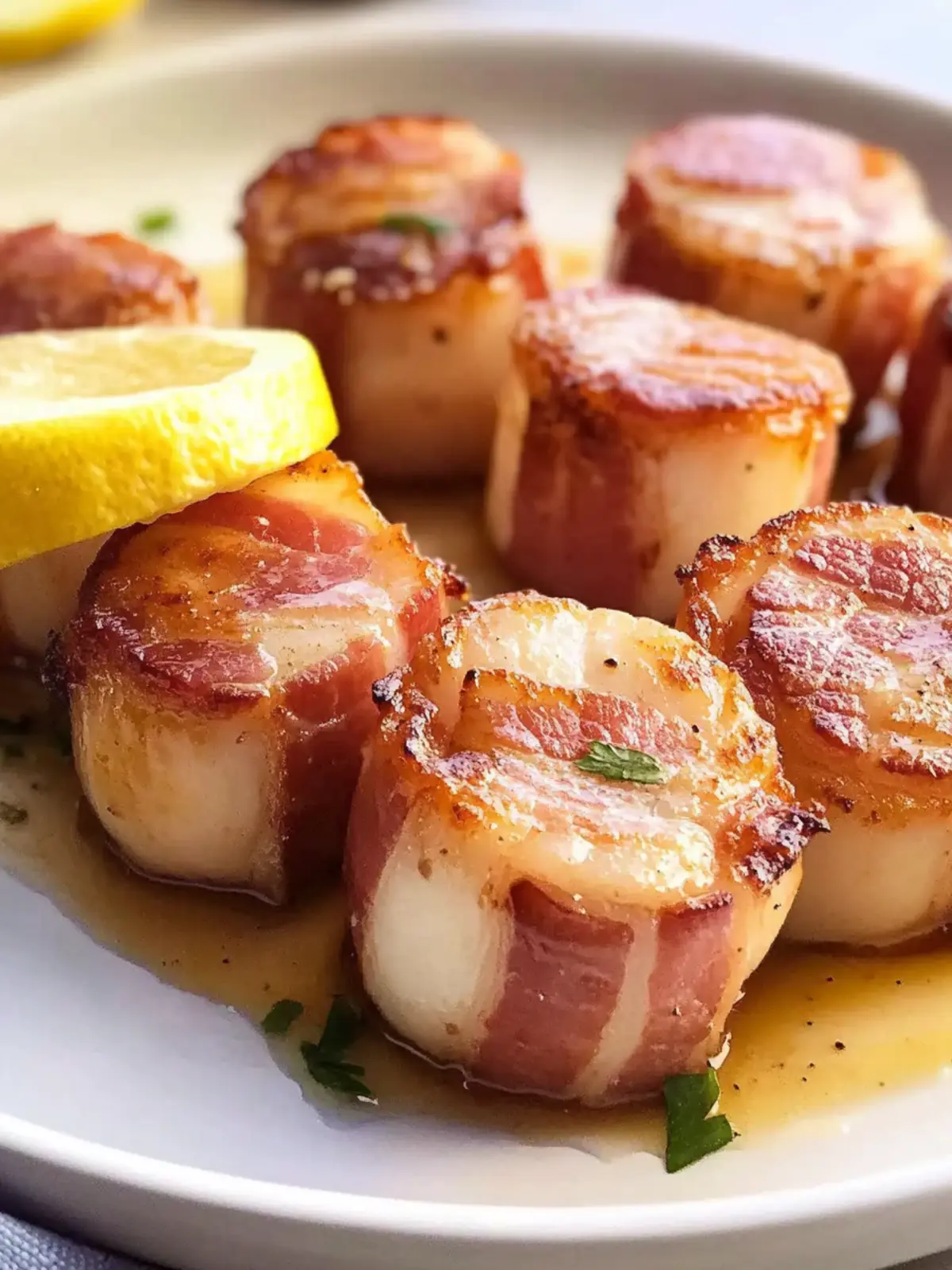
Imagine the perfect bite: the crisp, savory crunch of perfectly cooked bacon giving way to a succulent, sweet sea scallop, all kissed with a hint of smoky seasoning. This isn't just a culinary dream; it's the reality of achieving perfect bacon wrapped scallops. Often known charmingly as "devils on horseback" when served as an appetizer, this dish is a true crowd-pleaser, combining complex flavors and textures into a deceptively simple package. While the idea seems straightforward – wrap a scallop in bacon and cook – the path to true perfection involves a few essential techniques that elevate this dish from good to unforgettable.
Many home cooks face the dilemma of rubbery scallops or limp bacon. The good news? You can achieve both a flawlessly tender scallop and irresistibly crispy bacon without starting a kitchen drama. With the right ingredients and a strategic approach, you're just a few steps away from mastering this elegant appetizer or main course.
The Quest for Perfection: Common Pitfalls & How to Avoid Them
The allure of bacon wrapped scallops is undeniable, but so are the common frustrations. Let's delve into the hurdles that often trip up aspiring chefs and discover how to navigate them with ease.
The Bacon Conundrum: Too Raw or Too Crispy?
One of the most frequent complaints revolves around the bacon. If you simply wrap raw bacon around a scallop and cook it, you often end up with bacon that's either undercooked and flabby by the time the scallop is done, or bacon that's perfectly crisp but at the expense of an overcooked, rubbery scallop. This imbalance is the nemesis of our perfect bite. The secret lies in giving the bacon a head start, ensuring it reaches the ideal crispness without sacrificing the scallop's delicate texture.
Scallop Shrinkage: Why Your Bacon Doesn't Fit
Another common disappointment occurs when beautifully wrapped scallops emerge from the oven looking like their bacon jackets are several sizes too big. This "shrunken scallop" phenomenon is usually due to one critical factor: wet-packed scallops. Many scallops on the market are soaked in a brining liquid to preserve them, which causes them to absorb water. While this might make them appear larger initially, all that absorbed water is released during cooking, leading to significant shrinkage and a less desirable texture. The result is a scallop that struggles to hold its embrace with the bacon.
The Right Cut: Choosing Your Ingredients Wisely
The type of bacon and scallops you choose significantly impacts the final outcome. Not all bacon is created equal for this recipe, and the same goes for scallops. Using thick-cut bacon, for instance, exasperates the cooking time dilemma, making it even harder to crisp without incinerating the scallop. Similarly, tiny bay scallops are often overwhelmed by the bacon and are much harder to work with than their larger counterparts.
Mastering the Method: Step-by-Step for Success
Armed with knowledge of the common pitfalls, let's dive into the foolproof method that guarantees perfect bacon wrapped scallops every single time.
Pre-Cooking Your Bacon: The Non-Negotiable Step
This is arguably the most crucial step for achieving that elusive crispy bacon and tender scallop combo. You want to pre-cook your bacon about 75% of the way. It should be cooked enough to render some fat and become pliable, but not so crispy that it breaks when you wrap it. Think of it as flexible, semi-cooked bacon. Cooking bacon in the oven is ideal for this purpose, as it keeps the strips long and flat, rather than shrinking and rippling as it would in a pan. Lay your bacon slices on a baking sheet lined with parchment paper or foil (for easy cleanup) and bake at around 375°F (190°C) for 10-15 minutes, or until it reaches that sweet spot of still-pliable but mostly cooked. Drain off any excess grease before wrapping. For a more detailed guide on this crucial step, read our article: Easy Bacon Wrapped Scallops: Pre-Cook Your Bacon for Perfection.
Preparing Your Scallops: Beyond Just Thawing
Firstly, opt for dry-packed sea scallops. These haven't been treated with phosphates or brining solutions, meaning they won't release excessive water during cooking and will maintain their size and sweet flavor. Look for labels like "dry-packed" or "diver-caught." Larger scallops (often labeled U-10, meaning under 10 scallops per pound) are much easier to handle and present beautifully. If using frozen scallops, ensure they are fully thawed in the refrigerator overnight. Before cooking, it's essential to thoroughly pat your scallops dry with paper towels. This removes surface moisture, which is key for getting a beautiful sear and preventing steaming. Also, check each scallop for a small, tough side muscle (sometimes present on larger scallops); if you find one, simply pinch and pull it off, as it can be chewy.
Wrapping and Securing: The Art of the Perfect Package
Once your bacon is pre-cooked and your scallops are prepped, it's time to assemble. Take a strip of pre-cooked bacon and wrap it snugly around the circumference of a scallop. The goal is to cover the sides and secure the bacon so it stays in place. Traditionally, this is done with a toothpick. If using toothpicks, ensure they are soaked in water for at least 30 minutes prior to baking to prevent burning. Alternatively, some chefs prefer to use a small piece of kitchen twine, or simply tuck the bacon end under the scallop when placing it on the baking sheet, relying on the cooking process to 'seal' it. For a truly professional look, ensure the bacon seam is neatly tucked. You can even experiment with overlapping the bacon slightly to create a more secure wrap without a toothpick, especially if you've chosen thin-cut bacon.
The Grand Finale: Cooking for Crispy & Tender
With your bacon-wrapped scallops assembled, arrange them on a baking sheet lined with parchment paper or foil, ensuring a little space between each one for even cooking. For optimal results, start by baking them in a preheated oven at around 400-425°F (200-220°C). This initial bake helps the flavors meld and ensures the scallop cooks through gently. Cook for 8-12 minutes, depending on the size of your scallops and the desired doneness. The final touch for ultimate crispiness is a brief stint under the broiler. Once the scallops are almost done, switch your oven to broiler mode and watch them closely for 1-3 minutes. The bacon will quickly crisp up and turn a beautiful golden brown. Be vigilant, as broilers can go from perfect to burnt in a flash!
Flavor Boosters: Elevating Your Bacon Wrapped Scallops
While bacon and scallops are a match made in heaven on their own, a few strategic additions can elevate this dish to gourmet status.
Seasoning for Success
Before wrapping, a simple seasoning goes a long way. A sprinkle of fine sea salt and freshly ground black pepper is a given. To add an extra layer of depth, consider smoked paprika. While regular paprika is fine, the smoked variety infuses a wonderful, subtle smokiness that complements both the bacon and the sweet scallops perfectly. A pinch of garlic powder or onion powder can also be added for an aromatic touch.
The Perfect Accompaniment: Sauces & Garnishes
For a classic and truly spectacular pairing, a vibrant lemon butter sauce is hard to beat. The bright, tangy notes of lemon and garlic cut through the richness of the bacon and scallops, creating a harmonious balance. A simple sauce can be made by melting butter with minced garlic, a squeeze of fresh lemon juice, and a touch of chopped fresh parsley or chives. As for garnishes, a sprinkle of fresh chives or finely chopped scallions adds a pop of color and a fresh, subtle oniony flavor that brightens the entire dish. These can be added just before serving.
Tips for Success & Troubleshooting
Even with the best instructions, a few additional insights can make all the difference in your culinary journey.
Ingredient Deep Dive
Remember, the success of your dish hinges significantly on your choice of core ingredients. Always prioritize dry-packed scallops and thin-cut, center-cut bacon. The thinness of the bacon makes it easier to wrap snugly and ensures it cooks evenly without overwhelming the scallop. Center-cut bacon strikes a good balance between meat and fat, providing flavor and pliability. Avoid excessively fatty or overly lean bacon, as both can pose challenges.
Making Ahead & Reheating
Bacon wrapped scallops are best enjoyed fresh, but you can certainly do some prep work in advance. Pre-cook your bacon and store it in the refrigerator. You can also pat dry and season your scallops, keeping them chilled until ready to wrap. If you have leftovers, reheat them gently in an oven or air fryer at a moderate temperature (around 300-325°F or 150-160°C) until warmed through and the bacon re-crisps. Microwaving is generally not recommended as it can make the scallops rubbery and the bacon soggy.
Mastering bacon wrapped scallops isn't just about following a recipe; it's about understanding the nuances of the ingredients and the cooking process. By pre-cooking your bacon, choosing dry-packed scallops, and finishing with a flourish under the broiler, you unlock the secret to a dish that is consistently crispy, tender, and utterly delicious. This simple yet elegant appetizer promises to impress, delivering a complex combination of salty, sweet, juicy, and crisp in every single bite. So, gather your ingredients, follow these steps, and prepare to delight your taste buds with truly perfect bacon wrapped scallops.
